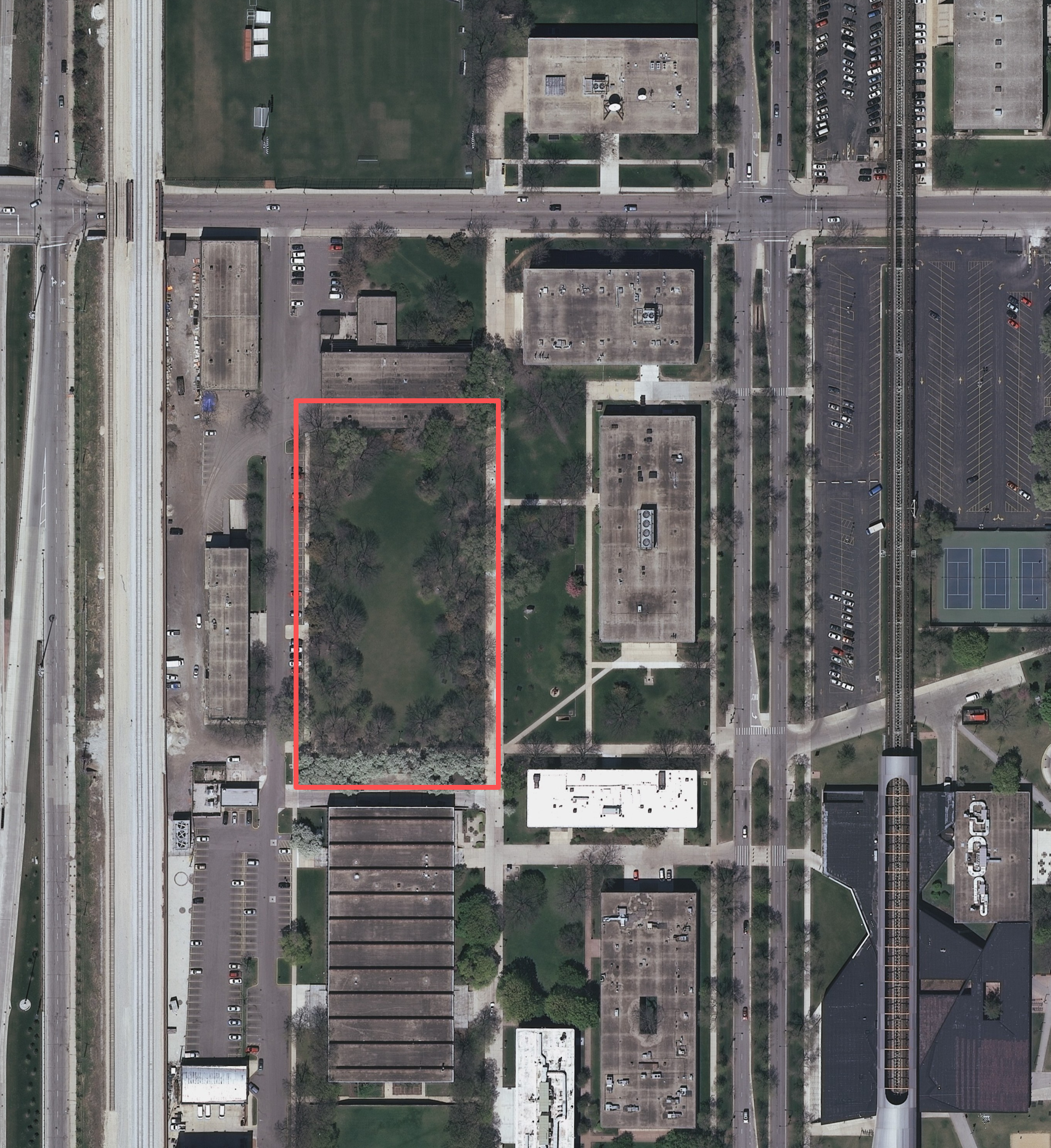
An orthoimagery photo from March 09, 2012, showing the Morton Park—trees were planted in the periphery that created a two-lobed shape (marked in red frame). Entity ID: 3127297_17508825, USGS EROS Archive.
Paper Title
A Vulnerable Landscape on a Registered National Landmark Campus: The Loss of Alfred Caldwell’s Morton Park at IIT
Abstract
Sterling Morton Park (Morton Park), on the campus of the Illinois Institute of Technology (IIT) on Chicago’s South Side, was designed in the early 1980s by Alfred Caldwell, Prairie School landscape architect and faculty at IIT. Morton Park was Caldwell’s last campus project. The two-acre park was distinguished by a central clearing encircled by loosely configured honey locust, ash, and hawthorn trees. The Eastern and Western tree lines pinched into the clearing to shape the clearing into two lobes — the significant spatial characteristic of the park, which it shared with Caldwell’s previous design for the Lafayette Plaisance at Detroit’s Lafayette Park, which is pinched into three lobes.
The park is dedicated to Sterling Morton—grandson of Arbor Day founder J. Sterling Morton and heir to a family legacy of tree advocacy. His father, Joy Morton founded the Morton Arboretum just outside of Chicago. The park embodied a multi-generational commitment to education, stewardship, and ecological research. As a meadow framed by trees, Morton Park offered a respite within IIT’s rigorous modernist campus and quickly became a beloved site of student and neighborhood gatherings, including festivals, religious celebrations, and graduation ceremonies. Yet, despite its social value and symbolic resonance, Morton Park survived less than four decades before its destruction in 2016 for the construction of the Kaplan Institute. The rationale for demolition invoked ecological decline—the loss of ash trees to emerald ash borer—as well as institutional priorities privileging architectural expansion over landscape preservation. The loss of Morton Park not only weakened the park settings for student activities but also damaged the holistic understanding of buildings and landscapes of the IIT campus on the National Register of Historic Places (designated in 2005).
Through archival research, oral histories, and analysis of campus arboretum documents, this paper situates Morton Park within broader questions of heritage conservation. The case illustrates how modernist campuses often safeguard their architectural integrity while allowing designed landscapes to remain vulnerable and disposable. More broadly, it underscores the challenges of translating landscape knowledge across generations: Caldwell's “gardener's method” relied on intimate, site-specific knowledge of planting and care, yet such tacit expertise proved difficult to transmit within institutional frameworks that favored static architectural preservation over adaptive landscape stewardship.
This paper documents Morton Park's trajectory from its creation to its erasure and interrogates the decisions that led to the destruction of a significant landscape on a nationally registered historic campus.
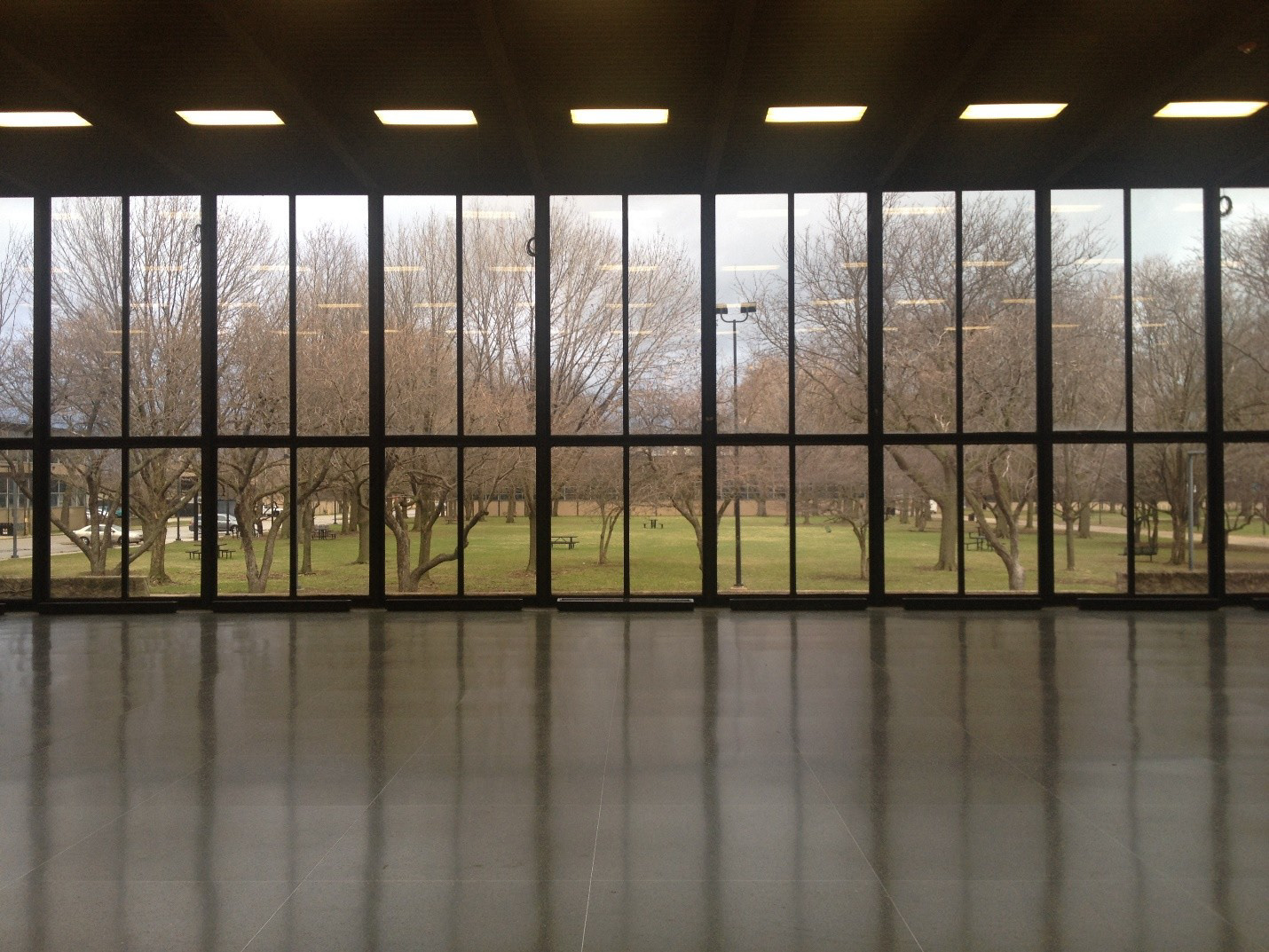
Morton Park seen from Hermann Hall, looking north. March 16, 2016. Courtesy of Ron Henderson, Professor of the Landscape program in the College of Architecture
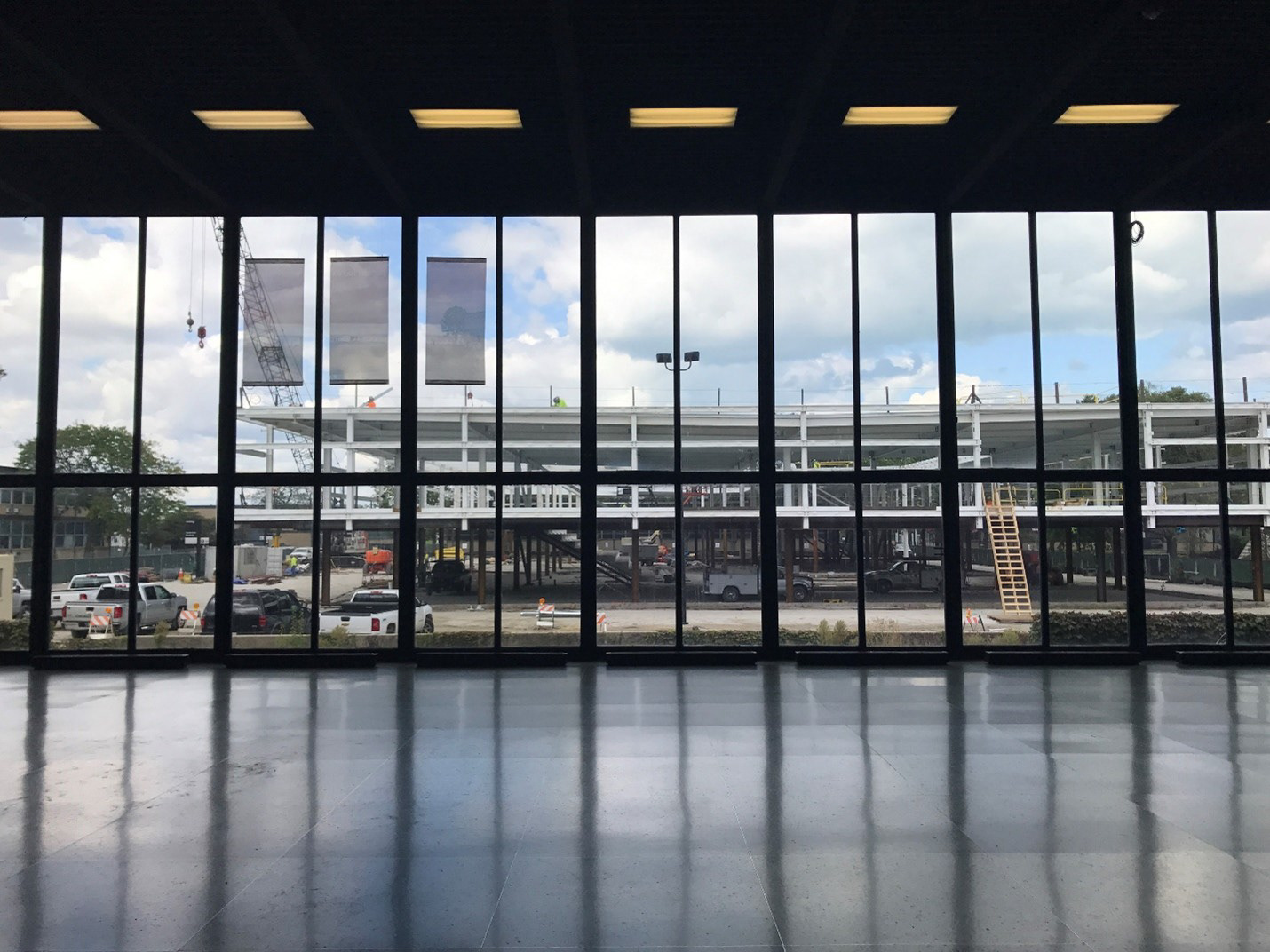
Former site of Morton Park, seen from Hermann Hall, looking north, with the Kaplan Institute under construction. September 5, 2017. Courtesy of Ron Henderson.